
Winemaking
Keep things simple.
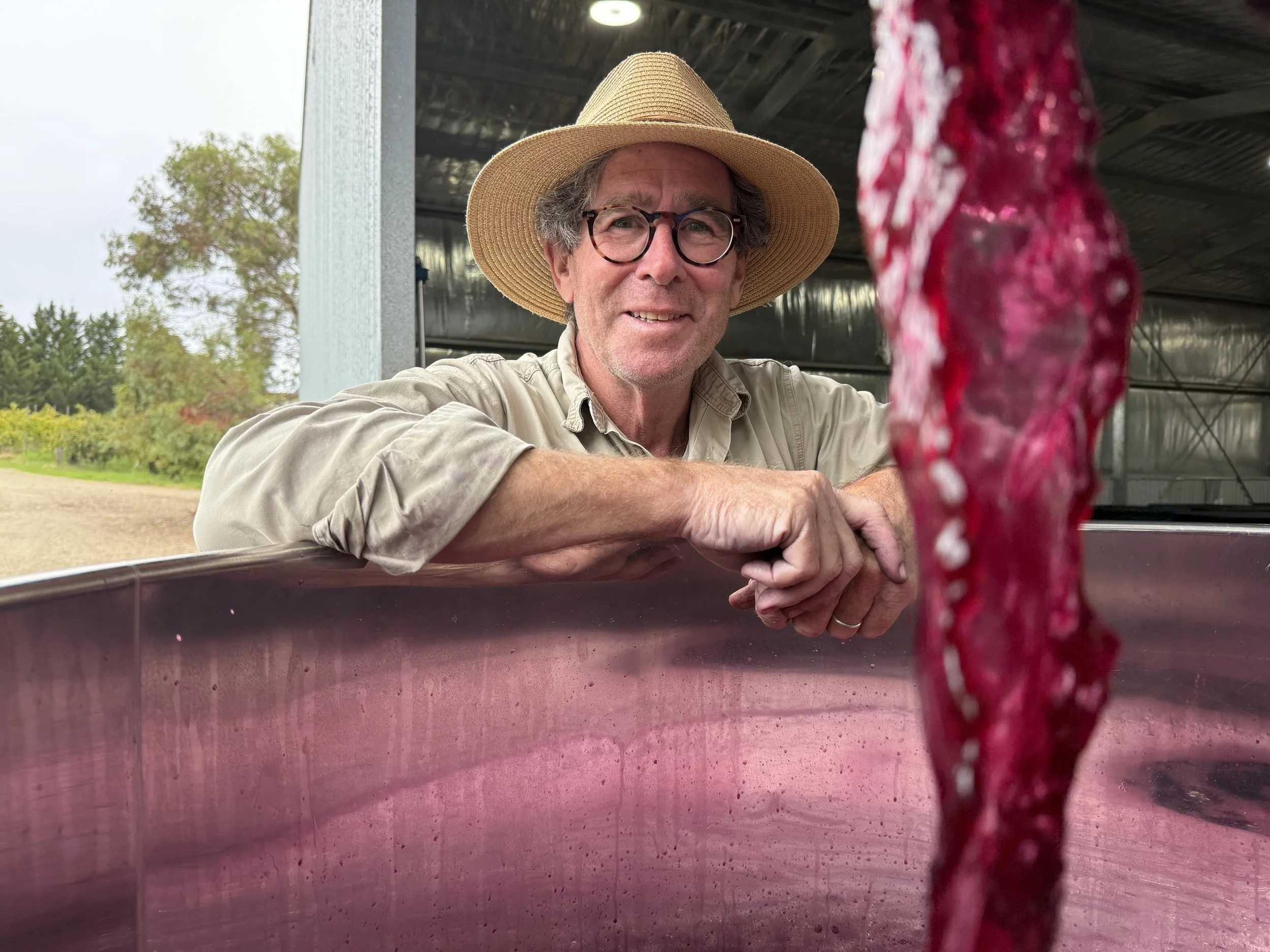
Since 2005 we have fermented our wines naturally using indigenous yeasts and without making additions or corrections, to produce age-worthy wines that retain natural freshness and intensity.
From the vineyard
Estate only.
Every Inkwell wine is made only from grapes we grow here, with as little interference as possible, so the wine tastes of this place.
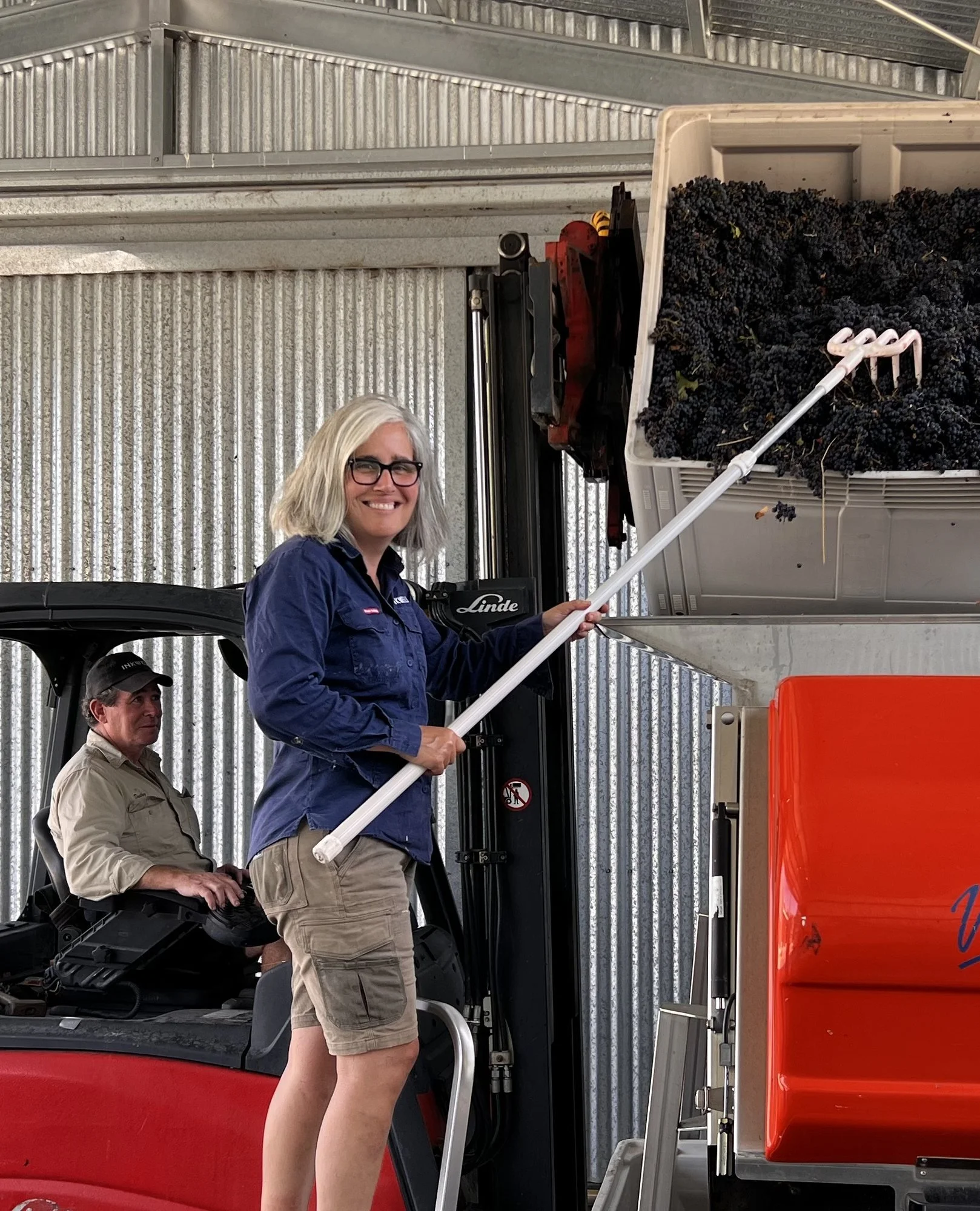
One tractor in the vineyard. One de-stemmer at the shed door. One forklift, and Dudley driving it.
The ferment
No commercial yeasts. No additives.
“We simply make wine fermented with no commercial yeasts and we don’t correct our wines with additives.” Dr. Irina Santiago-Brown
Our own yeast
A yeast found here, and 300 to 700 million years older.
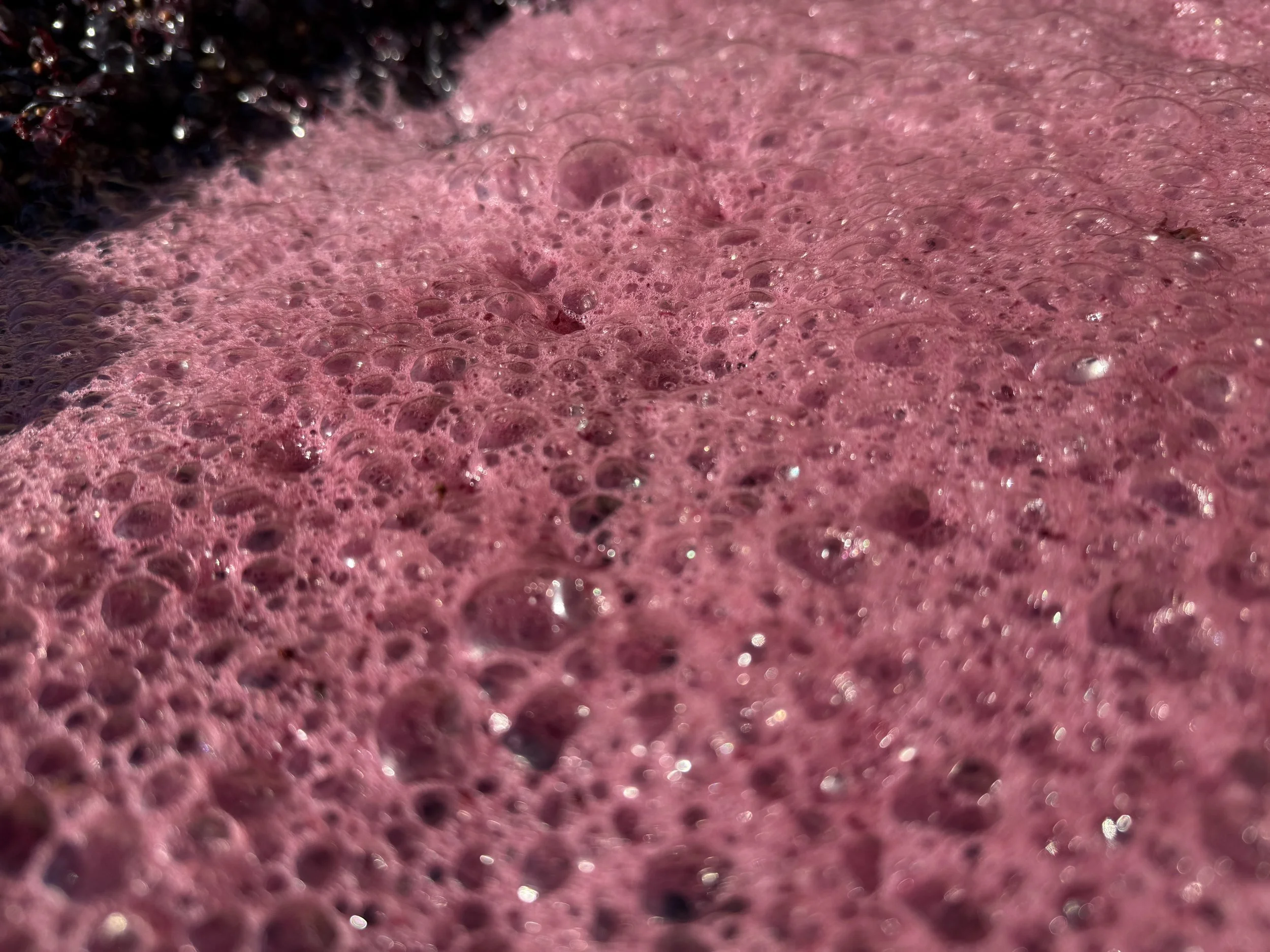
Because we have never used commercial yeasts, something unusual happens in our ferments. In a project with the Australian Wine Research Institute, geneticists identified the yeast finishing our ferments as schizosaccharomyces, a different species from the one that does the job in most of the wine world, and believed to be 300 to 700 million years older. It lives on our property. The research began with our Shiraz ferments, went on to our Grenache, then our Viognier and our other wines: all our wines ferment this way. Inkwell is the only winery documented where ferments finish with non-saccharomyces yeast present.
“So, the next person who tells you all this wine talk about terroir is guff, tell them about this.” Dudley Brown
One press
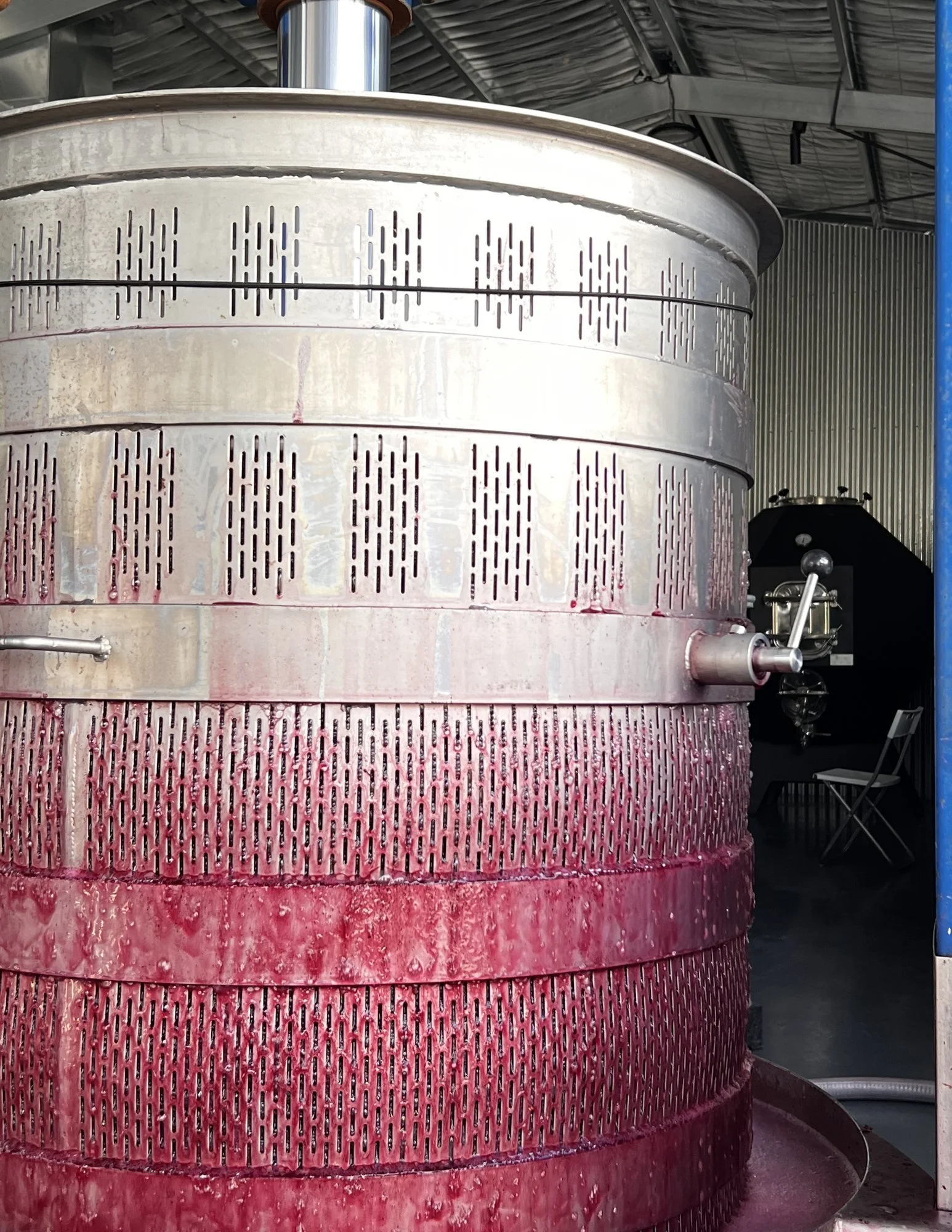
Gently, in a basket.
We use a basket press for gentle extraction. It preserves natural balance and purity, and lets the vineyard and the season speak without excess.
The yellow eggs
Concrete, neutral in taste.
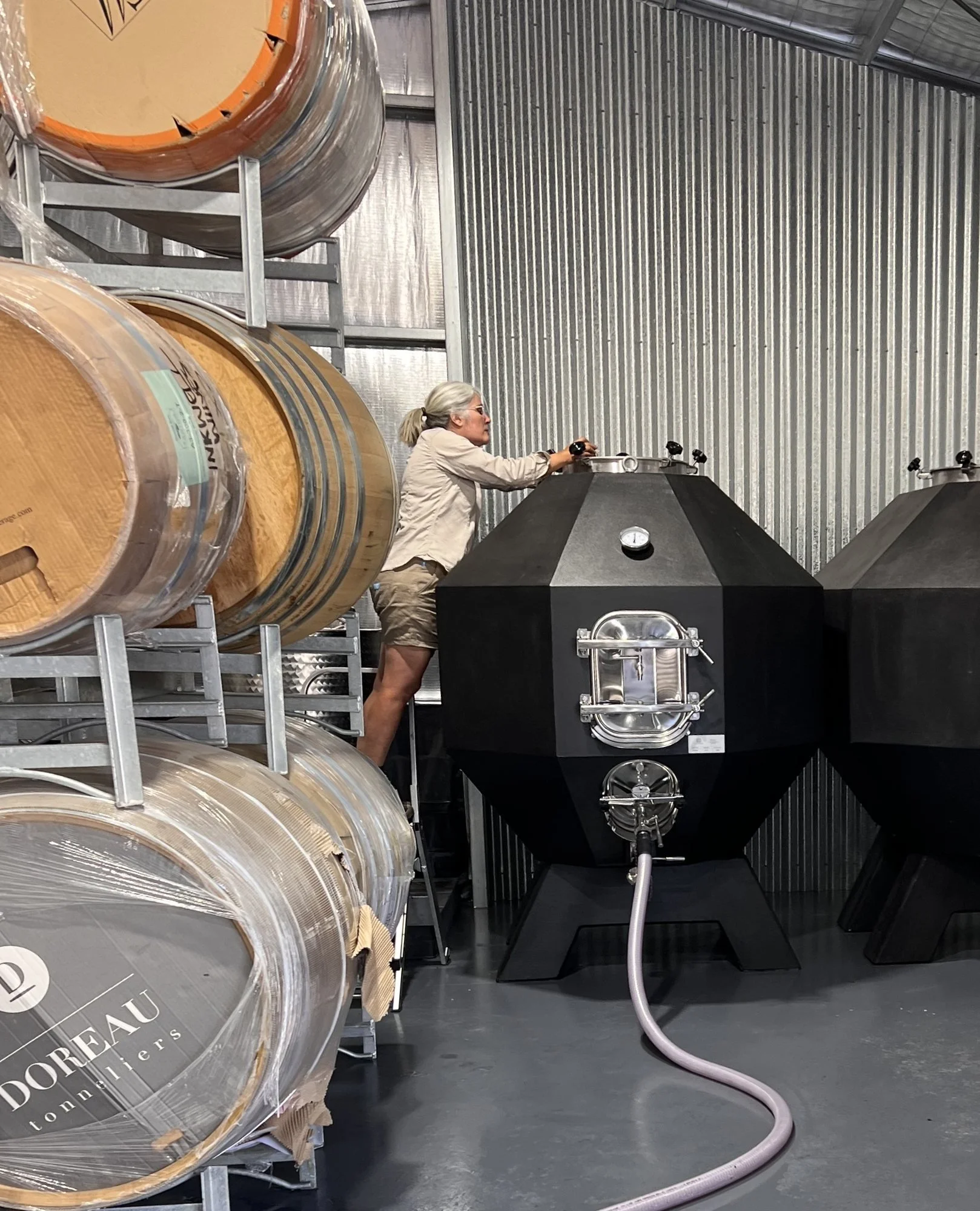
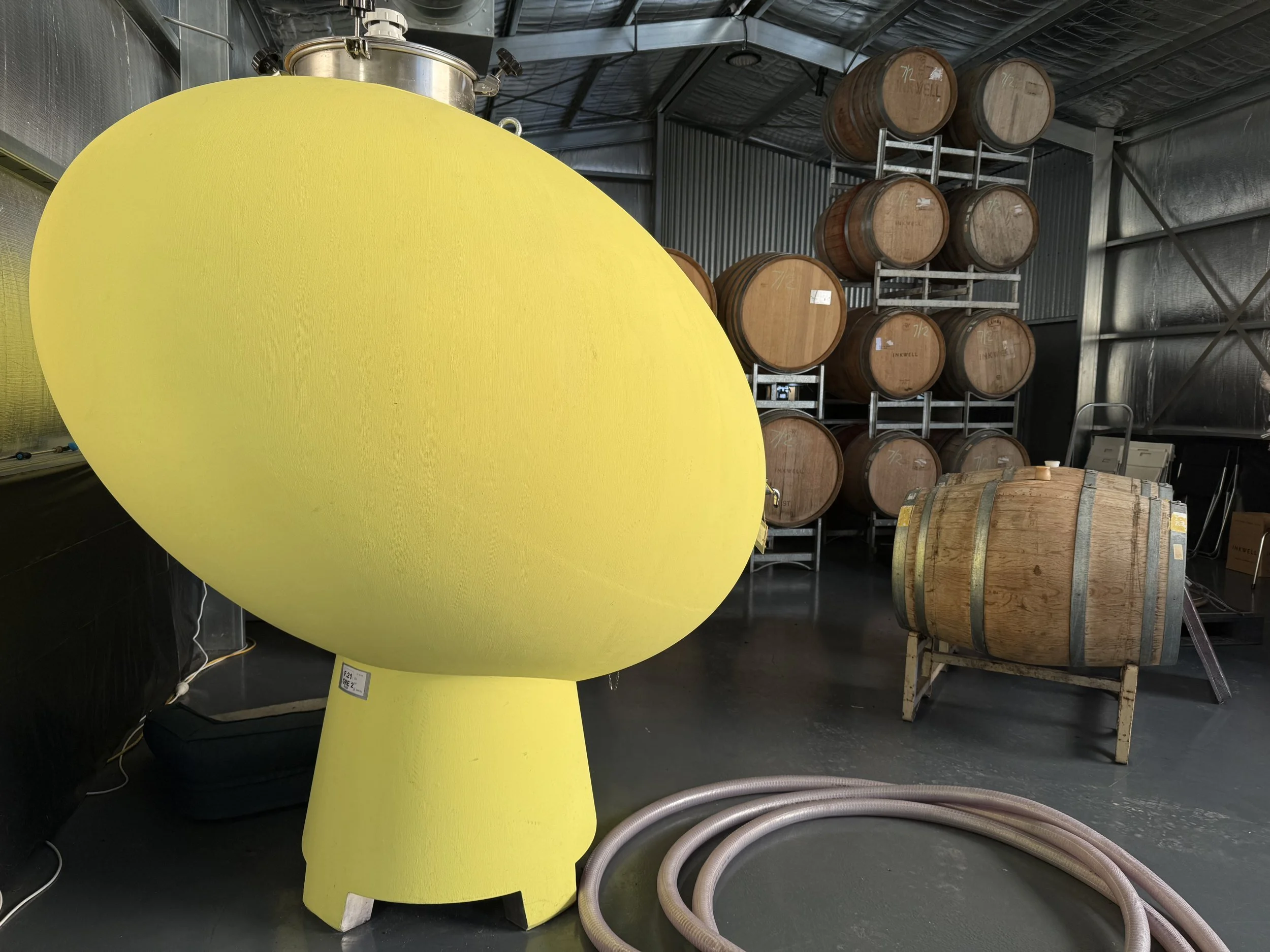
Our yellow eggs and our black fermenters are all made by CLC, near Padova in Italy, a family business that has been making concrete wine tanks since 1955 and finishes each one by hand.
Our fermenters are small on purpose. Concrete is very stable in temperature, so they don’t need artificial cooling or additions. Nothing steps in between the grapes and the ferment.
Concrete is neutral in taste, so nothing stands between the wine and the vineyard. It holds its temperature steadily. It lets in a tiny amount of air, which softens the tannins and builds texture without adding oak or anything else. And the egg shape keeps the wine in constant, gentle movement by itself, stirring the lees as it ages.
Yellow Grillo ages in them. So does Gravity’s Gone Grenache, and part of Pink Cashmere.
The barrels
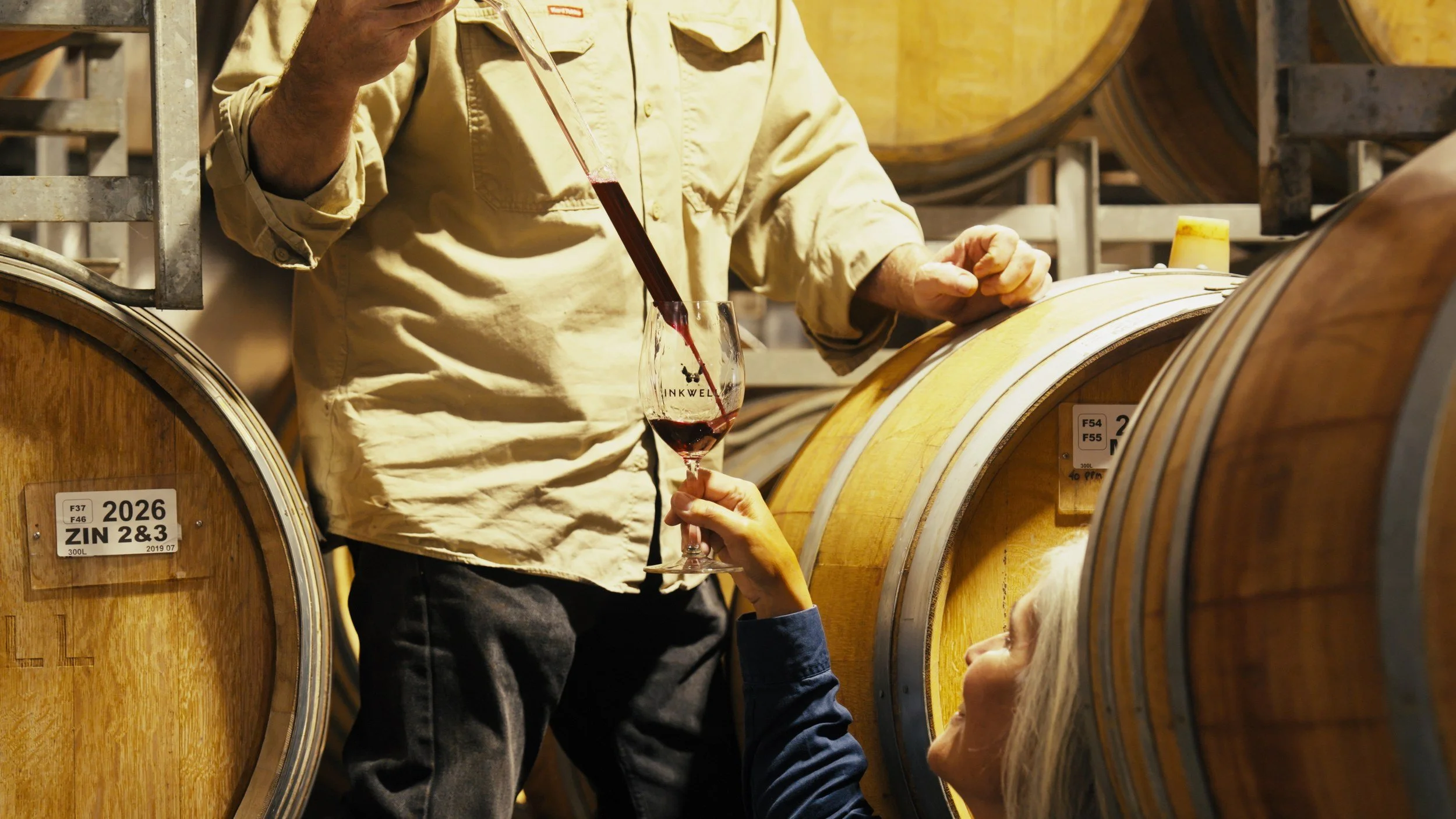
The right oak, for the wines that want it.
Not every wine belongs in concrete. We use French oak, some of it neutral, and American oak for our Primitivo, because its sweetness suits the grape’s natural high acidity.
Yellow Grillo
We removed Shiraz to plant it.
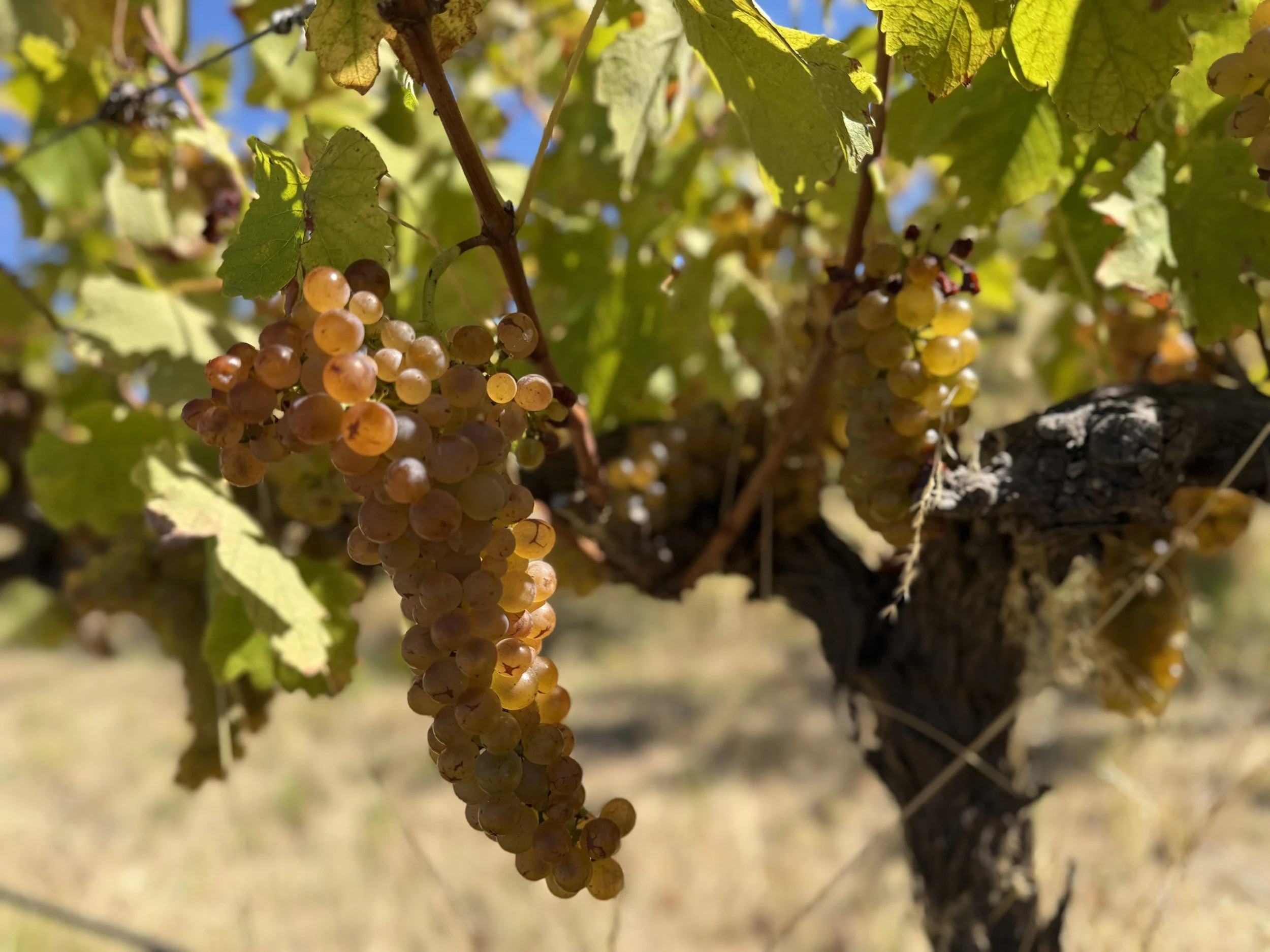
Grillo is a white grape from Sicily, best known as one of the traditional grapes of Marsala. We removed 1.5 hectares of Shiraz to plant it, because we believed its Mediterranean origins and natural affinity for a warmer, drier climate made it worth the experiment. We were right.
A few days of skin contact gives the wine colour, texture and depth. Then the concrete eggs. Unfined. Unfiltered. Estate grown. Regenerative organic.
Tangerine
We call ours tangerine.
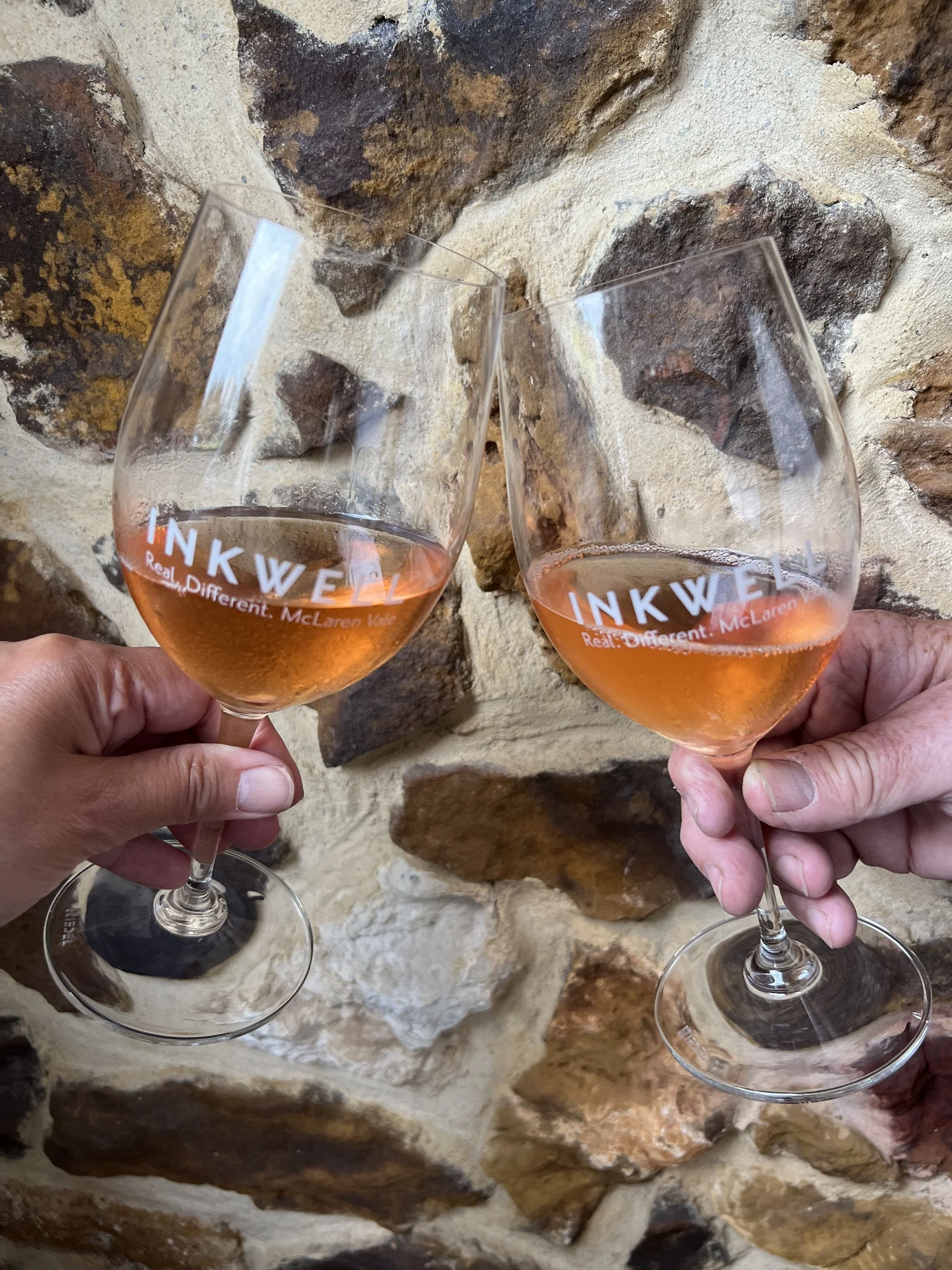
Tangerine is a skin contact white, or “orange”, wine. It has become Inkwell’s fastest selling wine. For us it hits the sweet spot: a serious wine that is simply delicious to drink.
Wonderful with spicy, creamy or fatty and salty dishes.
What it comes to
The fingerprint of the place.
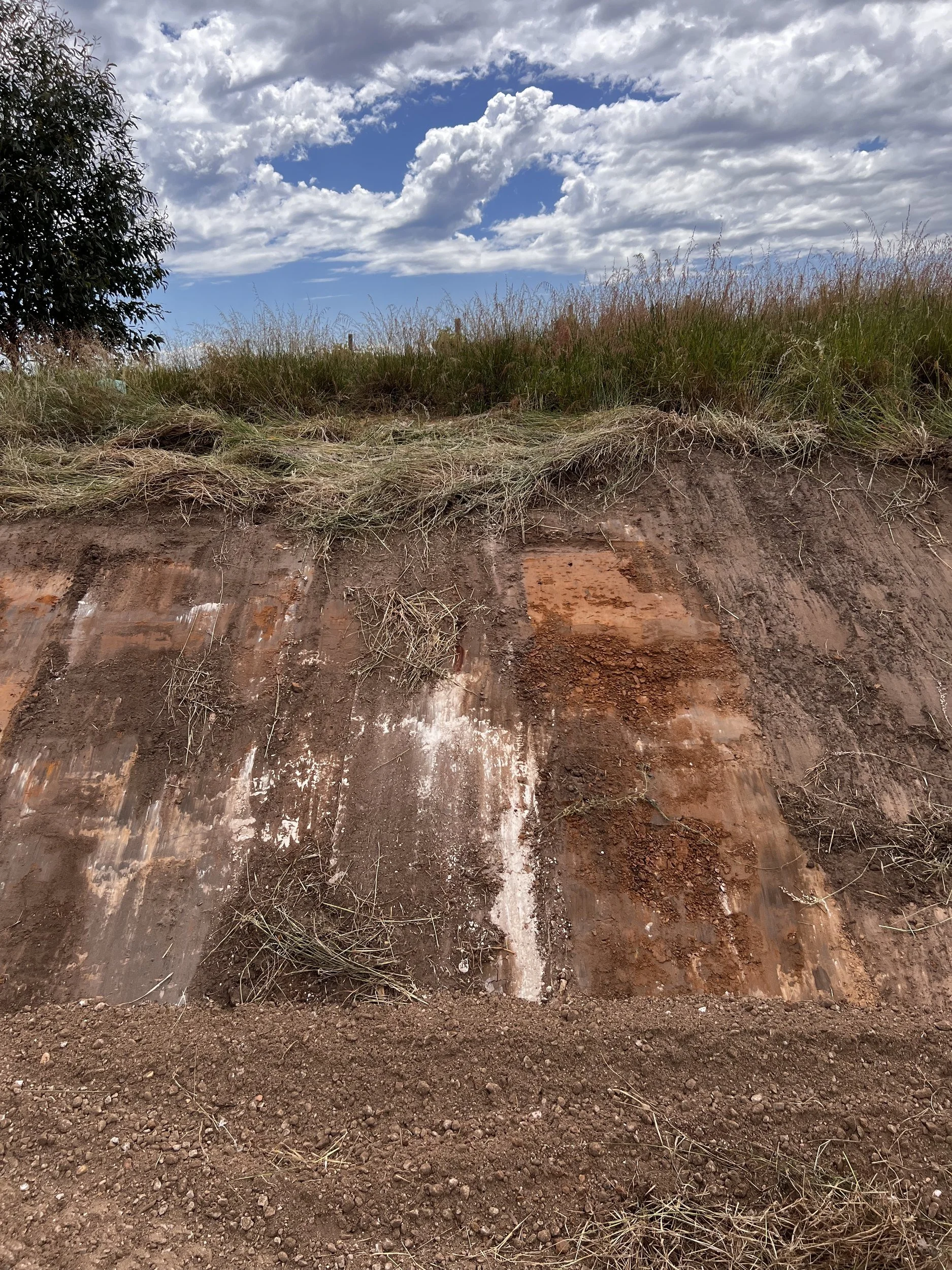
Deep white sands, clay on limestone, ironstone. Our own yeast. No additions except sulphur, and sometimes not even that.
In the glass, it comes out as freshness, high but balanced natural acidity, smooth tannins, and usually less alcohol than the regional average, in fully ripe fruit.
The wines
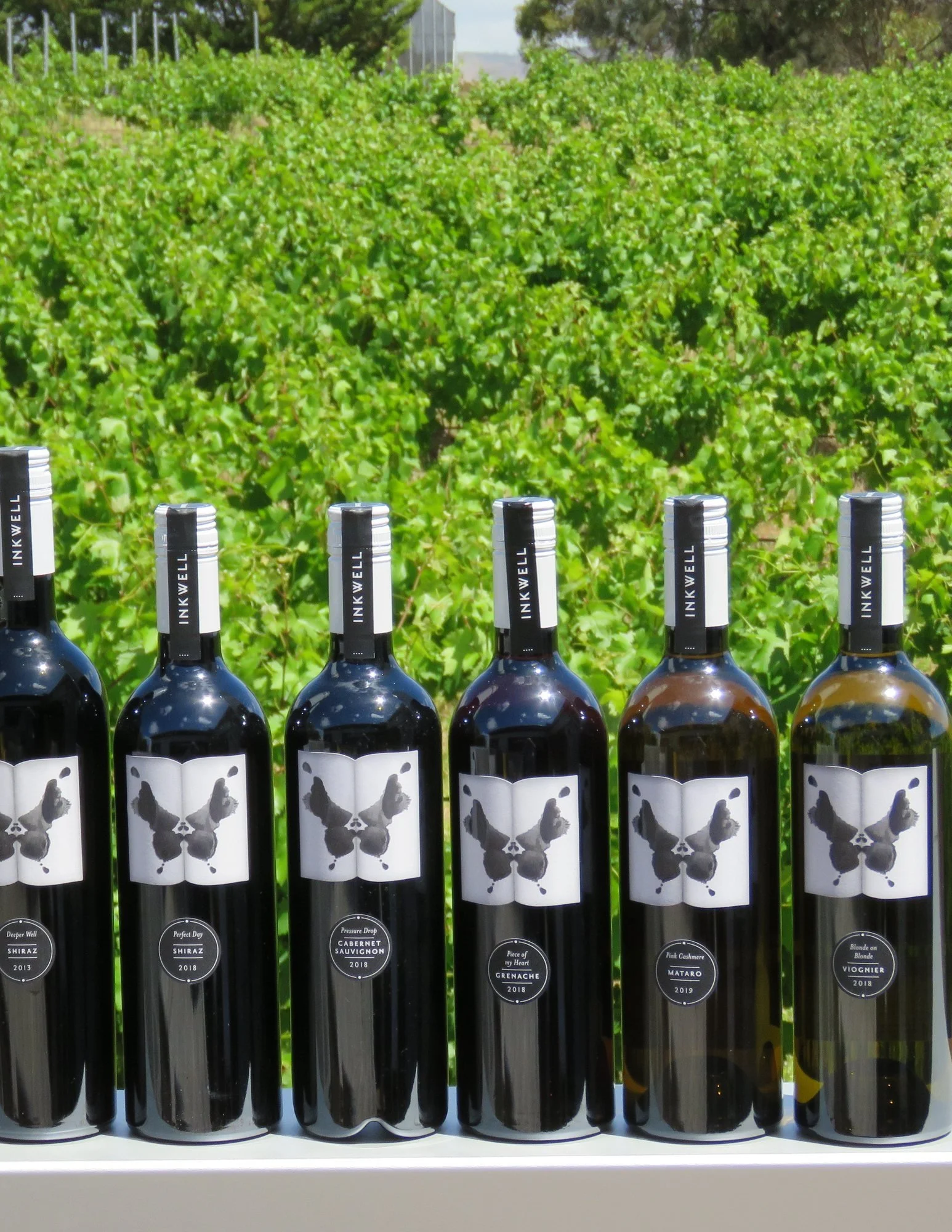
All named after songs or albums.
Dudley was a DJ in his early years. Some of our wines are named just because the title is good, and some because the song means something to us.